
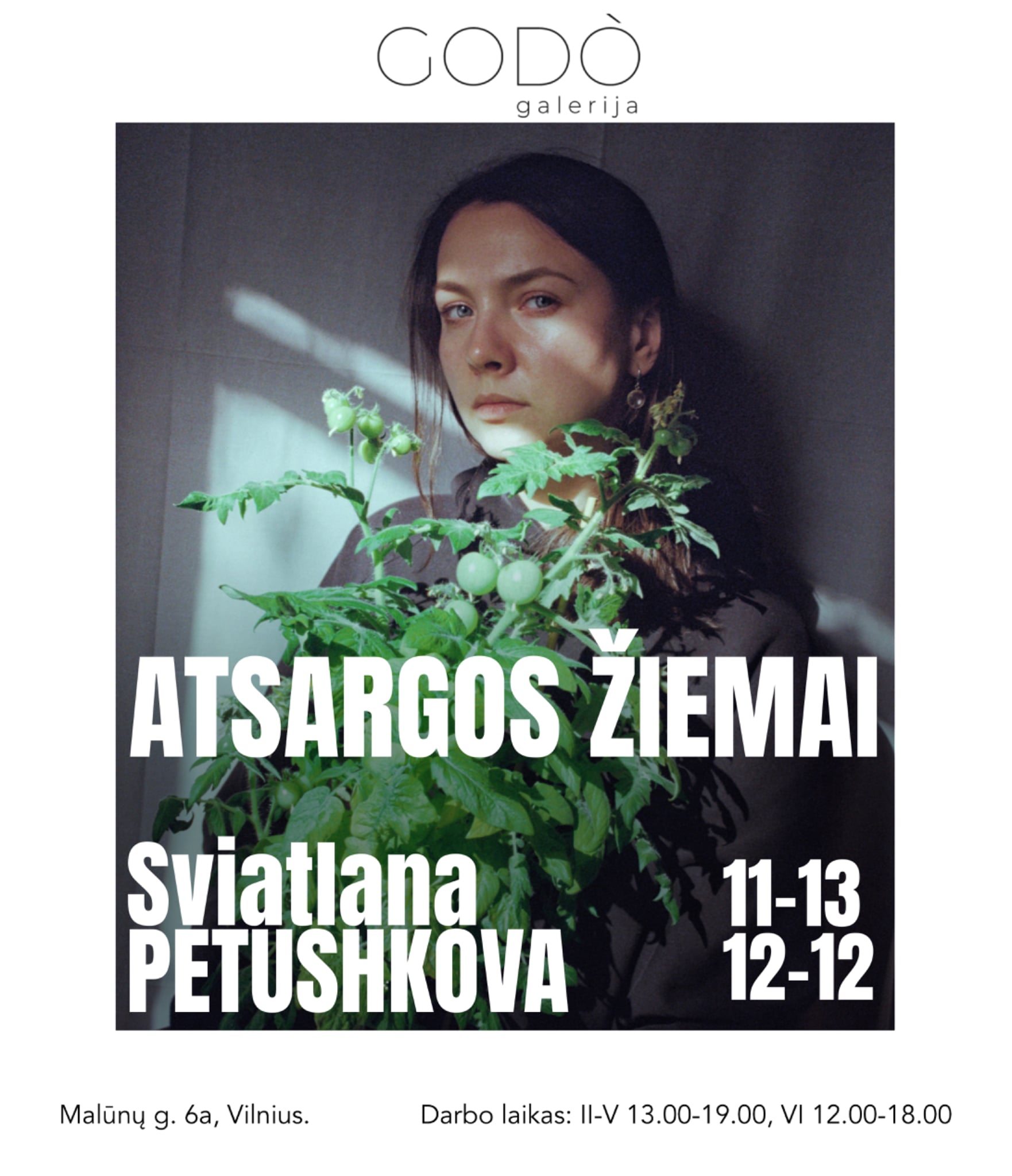
Lapkričio 13 d., 19 val., Vilniaus meno erdvė „GODÒ galerija“ pristato menininkės Sviatlanos Petushkovos personalinę parodą „Atsargos žiemai“.
Kas nutinka žmogui po jį ištikusio sukrėtimo? Ar įmanoma iš naujo atrasti save, kai nebeegzistuoja ankstesnis supratimas apie tai, kas esame? O gal atsigauti reiškia ne sugrįžti į ankstesnį save, bet atrasti galimybę sukurti kažką, ko anksčiau nebuvo?
Sviatlanos Petushkovos projektas „Atsargos žiemai“ gimė iš asmeninės menininkės trauminės patirties ir išaugo į tyrimą apie tai, kaip gyvenimas tęsiasi po įvykių, sugriovusių mūsų vidines atramas. Ne viską, kas sunaikinta, galima atkurti, o anksčiau patirtas vidinis vientisumas gali taip ir likti nepasiekiamas. Tačiau iš to, kas liko, iš atskirų fragmentų gali gimti nauja visuma – turinti savitą struktūrą, šviesą ir savas egzistavimo sąlygas. Čia atsigauti nereiškia sugrįžti į pradinę būseną. Atsigavimas skleidžiasi per rūpestį, kantrybę ir pasiryžimą suteikti gyvybę tam, kas dar neturi aiškaus pavidalo.
Projekte „Atsargos žiemai“ kūryba nėra priešprieša griūčiai – ji gimsta iš griūties pasekmių, atsispiriant nuo to, kas liko. Nauja mūsų forma nepanaikina ankstesnės patirties ir nesumenkina patirto skausmo. Ji egzistuoja savarankiškai – ne kaip praeities taisymas ar įrodymas, kad skausmas turi prasmę. Visa, kas nauja, išlieka pažeidžiama. Neįmanoma visiškai apsisaugoti nuo išorinio pasaulio, o naujų mūsų formų atsiradimas negarantuoja nei saugumo, nei galutinės pergalės prieš griūtį.
Užaugintas derlius tampa tokios egzistencijos galimybės liudijimu. Kiekvienas vaisius – laiko, darbo ir rūpesčio rezultatas, materialus įkūnijimas to, ką, nepaisant aplinkybių, pavyko užauginti. Vaisiai surinkti ir sudėti į krištolines vazas. Jie tampa brangiais ne todėl, kad yra tobuli ar amžini, bet dėl to, kad jų egzistavimas pareikalavo augimui būtino laiko ir rūpesčio. Tai, kas gali išnykti, nebūtinai yra mažiau vertinga. Gal būtent laikinumas ir daro rūpestį būtinu.
„Atsargos žiemai“ – tai bandymas apmąstyti traumą per kūrybos patirtį, išsaugoti tai, kam pavyko užaugti, kartu pripažįstant, kad priešakyje laukia neužtikrinta ateitis, kuriai neįmanoma visiškai pasiruošti. Mes renkame, saugome, globojame. Kuriame savus būdus išgyventi šaltį. Galbūt neįmanoma pasiruošti viskam, kas gali nutikti, ar užtiktinti, kad visa, kas mums brangu, išliks. Šis projektas nėra apie pergalę prieš traumą. Jis – apie galimybę kurti ir po jos. Apie to, kas atsirado iš griūties, vertę ir apie naujų mūsų formų teisę egzistuoti ne kaip prarastų dalykų kompensacija, bet kaip savarankiška būtis.
Ne viską įmanoma apsaugoti ir ne viską galima atkurti. Tačiau net ir po griūties išlieka galimybė kurti ir suteikti pasauliui naujų prasmių.
Paroda vyks iki gruodžio 12 d., lankymas nemokamas.
Apie autorę:
Sviatlana Petushkova – tarpdisciplininio meno kūrėja, šiuolaikinio meno magistrė. Nuo 2022 m. ji yra Lietuvos dailininkų sąjungos narė, aktyviai plėtojanti savo meninę veiklą, dalyvaujanti konkursuose ir parodose, tęsianti kūrybinį darbą bei pilietinę veiklą.
Jos kūrybinė praktika apima įvairias medijas, tarp jų analoginę fotografiją, grafiką ir erdvines instaliacijas. Savo darbuose ji tyrinėja migracijos, tapatybės, akultūracijos ir namų sampratos temas globaliame kontekste. Meninėje kūryboje atsiskleidžia gilus priklausymo ir saugumo jausmo tyrimas, kurį formuoja jos, kaip politinės pabėgėlės, patirtis ir aktyvus dalyvavimas kultūriniame dialoge.
EN
On November 13 at 7 PM, the GODÒ gallery presents “Reserves for Winter”, a solo exhibition by artist Sviatlana Petushkova.
What happens to a person after devastation? Is it possible to put oneself back together when the former form no longer exists? And what if recovery is not a return to who we once were, but an opportunity to create something that did not exist before?
Sviatlana Petushkova’s project “Reserves for Winter“ emerged from the artist’s personal experience of trauma and developed into an exploration of how life continues after events that unsettle our inner foundations. Not everything that has been destroyed can be restored, and the wholeness we once knew may remain beyond reach. Yet a new form can emerge from the fragments, with its own structure, light and conditions of existence. Here, recovery does not mean returning to an original state. It unfolds through working with what has survived, through care, patience and a willingness to give life to something that has not yet taken a definite form.
In “Reserves for Winter”, creation is not opposed to destruction. It takes place in the aftermath, working with what remains. A new form does not erase previous experience or diminish the pain it has caused. It exists independently, neither as a correction of the past nor as proof that everything happened for a reason. Yet what is new remains vulnerable. It cannot be fully protected from the outside world, and its existence guarantees neither safety nor a final victory over destruction.
The harvested crop becomes a testament to the possibility of such an existence. Each fruit is the result of time, labour and care, a material embodiment of what has managed to grow despite the circumstances. The fruits are gathered and placed in crystal vases. They become precious not because they are perfect or eternal, but because their existence required the time necessary for growth and the care without which that growth would have been impossible. What can disappear is not necessarily less valuable. Perhaps it is precisely its transience that makes care necessary.
“Reserves for Winter “is an attempt to reflect on trauma through the experience of creation, to preserve what has managed to grow while acknowledging that an uncertain future lies ahead, one for which it is impossible to prepare fully. We gather, preserve and protect. We create our own ways of enduring the cold. Perhaps it is impossible to prepare for everything that may happen or to guarantee the survival of what we hold dear. This project is not about triumphing over trauma. It is about the possibility of continuing to create in its aftermath. It considers the value of what emerges from destruction and the right of the new to exist not as compensation for what has been lost, but as something in its own right.
Not everything can be protected, and not everything can be restored. Yet even after destruction, the possibility remains to create and to fill the world with new meaning.
About the artist:
Sviatlana Petushkova is an interdisciplinary visual artist. Master of Contemporary Art. Since 2022 she has been a member of the Lithuanian Union of Artists, where she actively develops her career, participates in competitions and exhibitions, and continues her creative work and civic engagement. Her artistic practice spans multiple media, including analog photography, printmaking, and spatial installations, exploring themes of migration, identity, acculturation, and the concept of home in a global context. Her art reflects a profound investigation into belonging and security, shaped by her experience as a political refugee and active participant in cultural dialogue.
The exhibition will run until December 12. Admission is free.